

Why Online Casino Ratings Can Mislead Players: What a Reliable Review Should Actually Check
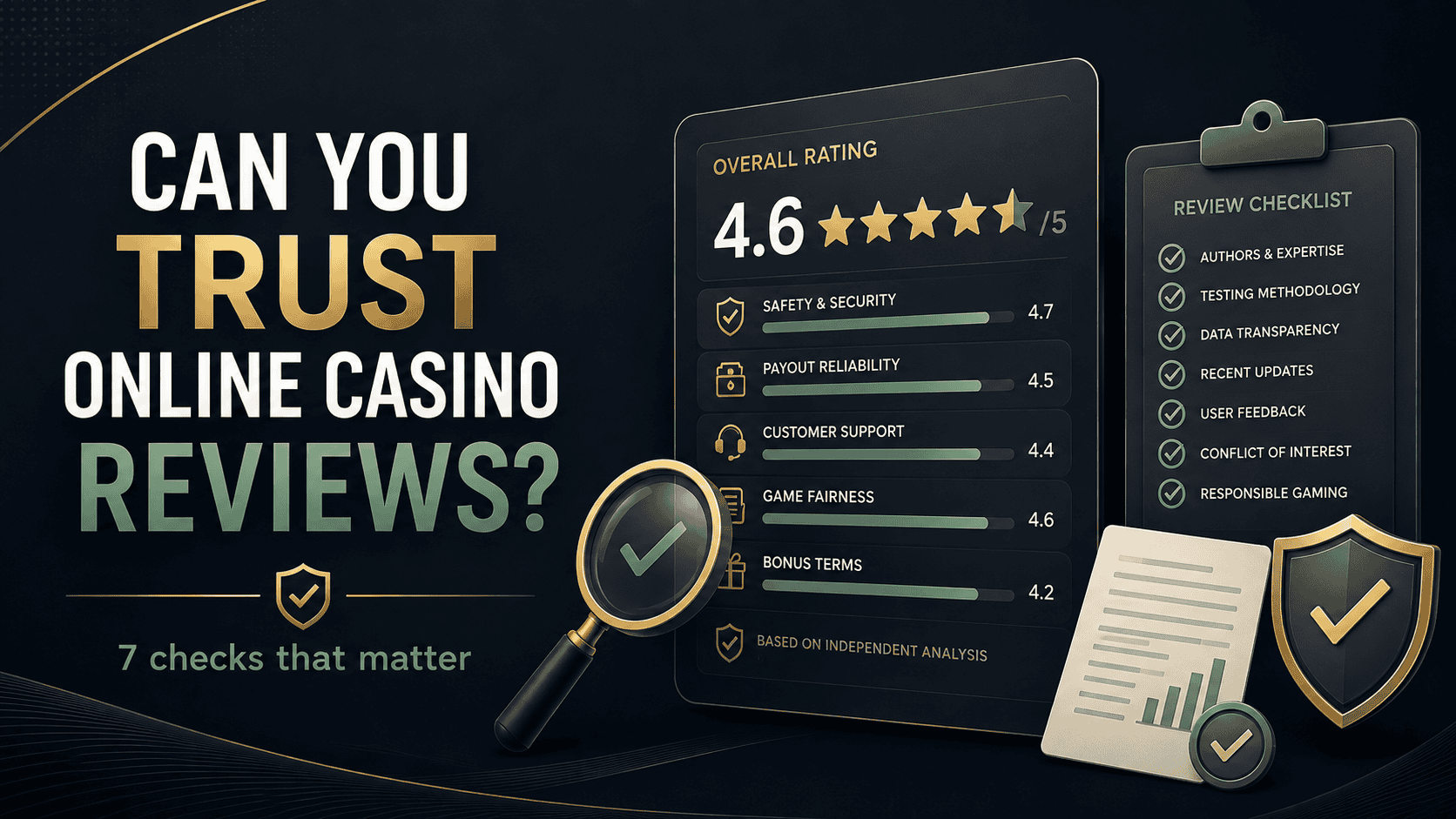
Casino A gets 9.6 out of 10.
Casino B gets 9.2.
Casino C is labelled “trusted” or “top-rated.”
Those scores look precise. The problem is that readers often have no idea how they were produced.
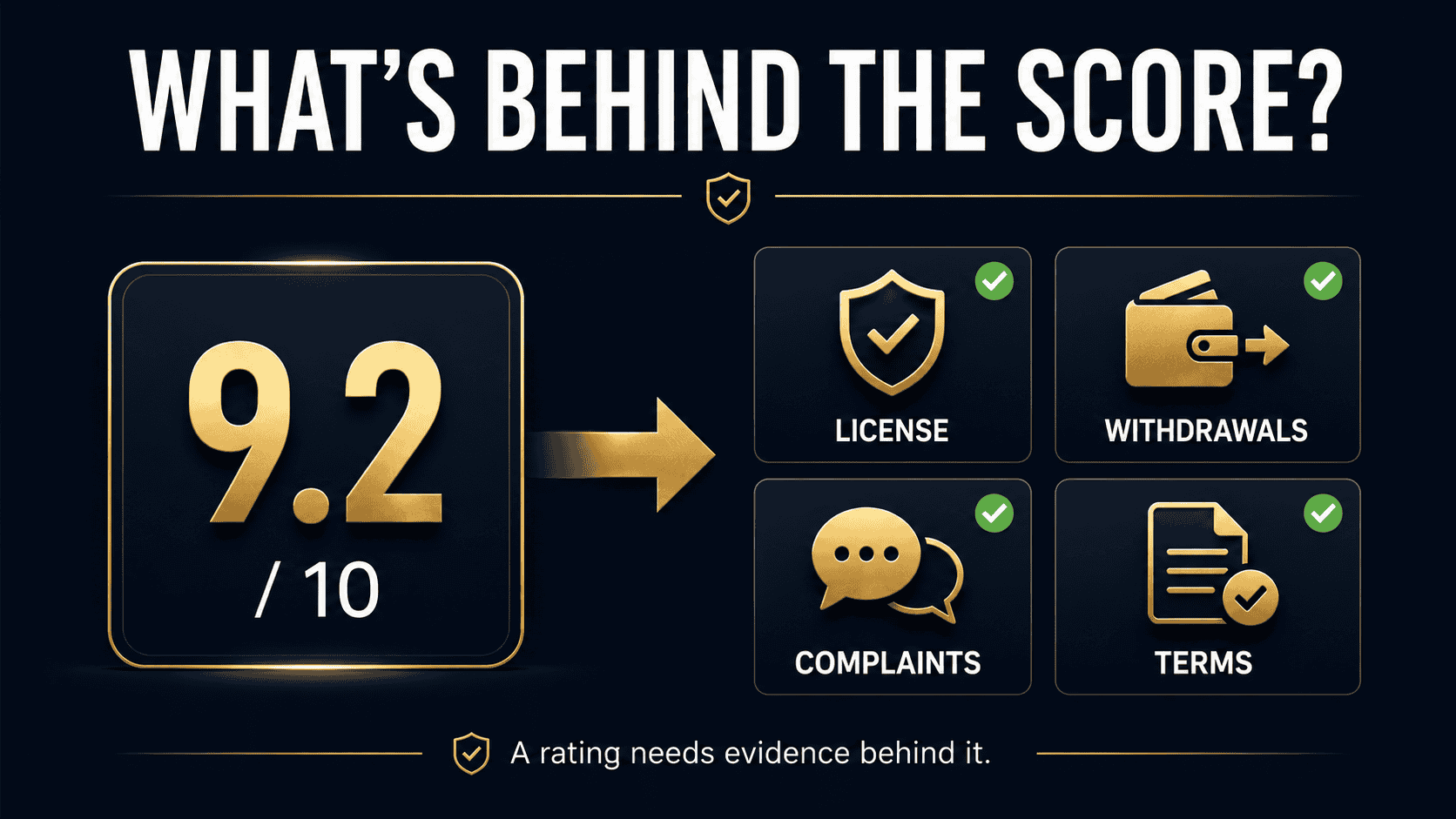
Was the licence verified? Were withdrawal conditions checked? Did the reviewer examine ownership, complaints and bonus restrictions? Or was the score mainly based on games, promotions and website design?
A casino rating is only as trustworthy as the method behind it.
The more confident the score looks, the more evidence readers should expect to see.
A Score Is Only as Good as the Method Behind It
A numerical rating creates an impression of objectivity.
A casino scoring 9.4 appears measurably better than one scoring 8.7. That comparison only means something if both were judged under the same criteria.
A reliable review should make it possible to understand:
-
which categories affect the score;
-
how important each category is;
-
what was tested directly;
-
which information came from public records;
-
how player complaints were interpreted;
-
when the review was last checked;
-
what could cause the rating to change.
Without that framework, a score can become little more than presentation.
Two publications may both award 9/10 while using completely different standards. One may reward bonuses and game count heavily. Another may place more weight on licensing, withdrawal reliability and account restrictions.
Independent research platforms such as CasinoIndex increasingly separate product quality from operator trust instead of treating every positive feature as equally important.
The final number matters less than understanding what produced it.
Games and Bonuses Are the Easy Part to Review
The most visible parts of a casino are also the easiest to inspect.
A reviewer can quickly see:
-
how many games are available;
-
which software providers appear;
-
whether live casino is offered;
-
which payment methods are supported;
-
how large the welcome bonus looks;
-
whether the mobile site works well.
Those details matter.
They simply do not tell the whole story.
The harder questions concern what happens after money enters the platform: whether terms are clear, whether withdrawals have meaningful restrictions, whether verification timing is predictable and whether recurring complaints point to the same problem.
A review that spends most of its time describing slots and promotions can still miss the areas that matter most when real money is at stake.
Licensing Should Be Verified, Not Repeated
“Licensed casino” sounds reassuring.
It is not enough on its own.
A useful review should identify the regulator, verify that the licence appears current and check which legal entity actually holds it.
Licensing frameworks also differ.
Some regulators provide clearer enforcement mechanisms, complaint routes or dispute-resolution structures than others. A licence therefore confirms a legal framework, but it does not by itself tell readers how strong that framework is when a dispute occurs.
The reviewer should also distinguish between information that has been independently checked and information copied from the casino’s own footer.
Repeating a licence badge is not the same as verifying it.
The same applies to ownership. Knowing the company behind a casino, its related brands and relevant history can reveal more than treating each website as an isolated product.
One Complaint Proves Little. Repeated Recent Patterns Matter More
Casino complaints are easy to misuse.
One angry review does not prove that an operator is unsafe. Players can misunderstand bonus terms, submit incomplete documents or become frustrated with legitimate account checks.
Ignoring complaints entirely creates the opposite problem.
The useful question is not simply:
How many complaints exist?
It is:
Are recent players repeatedly describing the same problem?
Ten recent reports describing the same withdrawal delay may be more informative than fifty unrelated complaints spread across several years.
A strong review looks at:
-
how recent the reports are;
-
whether the same issue repeats;
-
whether several independent sources describe similar behaviour;
-
whether the operator responds;
-
whether disputes appear to be resolved;
-
whether the complaint matches the casino’s current terms.
Large casinos may naturally receive more complaints because they have more customers.
Recency, repetition and context usually tell readers more than the raw number.
One Source Is Not Enough
Reliable casino research should not depend on one source.
The operator’s own website is useful for current terms and product information, but it is obviously not an independent assessment.
A forum thread can reveal a player experience, but one discussion cannot establish a broad pattern.
Strong research triangulates information.
That can include:
-
the regulator’s database for licensing;
-
the casino’s current terms;
-
several complaint sources over time;
-
ownership or company records where available;
-
direct platform testing;
-
payment or transaction evidence where relevant.
Different sources answer different questions.
A casino may accurately list its licence but describe withdrawal expectations vaguely. A player complaint may reveal a possible problem but omit an important term that affected the dispute.
The reviewer’s job is to compare the evidence rather than simply repeat whichever source supports the strongest headline.
The Withdrawal Stage Tests the Quality of the Review
Registration tells reviewers relatively little about how an operator behaves under pressure.
Depositing is designed to be easy.
Browsing games is easy.
The more revealing stage often arrives when money needs to leave the platform.
That is where several systems can meet:
-
withdrawal approval;
-
identity verification;
-
payment ownership;
-
account restrictions;
-
bonus review;
-
transaction limits;
-
source-of-funds checks.
A serious review does not need to treat every delay as suspicious.
It does need to explain what can happen.
For example, “fast withdrawals” should not refer only to blockchain speed or an instant payment rail. The operator may still have an internal approval process before money is released.
A review that misses that distinction can make a technically accurate claim while giving readers the wrong expectation.
Affiliate Relationships Do Not Automatically Make a Review Unreliable
Many gambling publications earn money through affiliate partnerships.
That does not automatically make their reviews false.
The more useful question is whether the commercial relationship can change the editorial verdict.
Readers can ask:
-
Can a paying partner receive a negative score?
-
Can an operator buy a higher ranking?
-
Do weaknesses remain visible after a commercial deal begins?
-
Is the methodology public?
-
Are commercial relationships disclosed?
-
Are factual corrections separated from editorial decisions?
The existence of an affiliate link matters less than whether the methodology remains transparent and criticism stays visible after the commercial relationship begins.
A site can earn affiliate revenue and still apply consistent standards.
The problem starts when commercial value becomes the hidden rating system.
A Review Should Show When It Was Last Checked
Casino reviews age quickly.
Ownership can change. Licences can expire or move. Payment methods disappear. Bonus terms are rewritten. Withdrawal limits change. A brand that deserved one rating eighteen months ago may not deserve the same rating today.
That makes freshness more than an SEO label.
A reliable review should show when important information was last checked and update the verdict when material facts change.
Simply changing the publication date is not enough.
A meaningful update should recheck areas such as:
-
licensing;
-
ownership;
-
payment methods;
-
withdrawal terms;
-
bonus restrictions;
-
recent complaint patterns.
The question is not whether a page looks fresh.
It is whether the evidence behind the rating is still current.
A Strong Product Can Still Have Weak Trust Signals
Consider a casino with excellent mobile performance, thousands of games, strong live dealer coverage and attractive cashback.
Those are real positives.
Now add unclear ownership, restrictive withdrawal limits and repeated unresolved complaints.
The product may still be impressive.
The trust profile is not.
This is where a rating system has to show judgment rather than simply count features.
Readers can see one example of how casino trust and real-money risk can be evaluated across areas such as withdrawals, verification, licensing and operator transparency.
A polished product should receive credit for being polished.
It should not automatically cancel out risks that become important once larger amounts of money are involved.
Generic Pros and Cons Are Not Enough
Many reviews end with a familiar balance:
Pros
-
large game library;
-
big bonus;
-
easy mobile access.
Cons
-
design could improve;
-
support may sometimes be busy.
That creates the appearance of criticism without telling readers much.
Useful weaknesses are specific.
For example:
-
first withdrawals may trigger verification;
-
weekly withdrawal limits apply;
-
some bonus games do not contribute to wagering;
-
promotional winnings have a maximum cashout;
-
the operating company is difficult to identify;
-
several recent complaints describe the same unresolved issue.
Specific criticism allows readers to decide whether a weakness matters to them.
Generic criticism does not.
Seven Questions to Ask Before Trusting a Casino Rating
-
Is the rating methodology visible?
If a casino receives 9.5/10, the publication should explain what contributes to that score. -
Was the licence actually verified?
Look for the regulator and operating entity, not just the word “licensed.” -
Does the review discuss withdrawals?
Limits, approval conditions and expected processing matter more than deposit speed alone. -
Are verification risks explained?
Readers should understand whether later checks can occur and what may trigger them. -
Are complaints analysed as patterns?
Recent, repeated reports are more meaningful than one isolated accusation. -
Are bonus restrictions included?
Wagering, maximum bets, restricted games and cashout limits can change the real value of a promotion. -
Does the review contain meaningful criticism?
If every casino scores above 9/10 and every weakness is trivial, the rating system is not helping readers distinguish risk.
These questions matter more than whether the publication uses stars, percentages or a ten-point scale.
Final Takeaway
Casino ratings can be useful.
They become misleading when the score looks more precise than the research behind it.
Players should look beyond the final number and ask how the reviewer reached it.
A strong review verifies licensing, identifies the company behind the brand, checks current terms, examines withdrawals and verification, interprets complaints in context and remains clear about commercial relationships.
It should also be updated when the evidence changes.
Most importantly, a reader should be able to disagree with the final score and still understand why it was given.
A casino score should summarize the evidence, not replace it.
And the more confident the score, the more transparent the method behind it should be.
18+ only. Gambling involves financial risk. Set limits, never chase losses and never gamble with money needed for essential expenses.