
Sweepstakes casinos and prediction markets are both experiencing significant growth in the U.S. While they are very different from each other, they have one major thing in common: they operate in regularity gaps between traditional gambling and other legal frameworks.
Whilst this makes both industries popular among many sports bettors and casino gamers, it has raised concerns among some experts, commentators, and regulators. To better understand why sweepstakes casinos and prediction markets are testing regulatory boundaries, we will discuss how both markets operate, their regulatory positions, and what the future may hold.
Prediction markets and the regulatory position
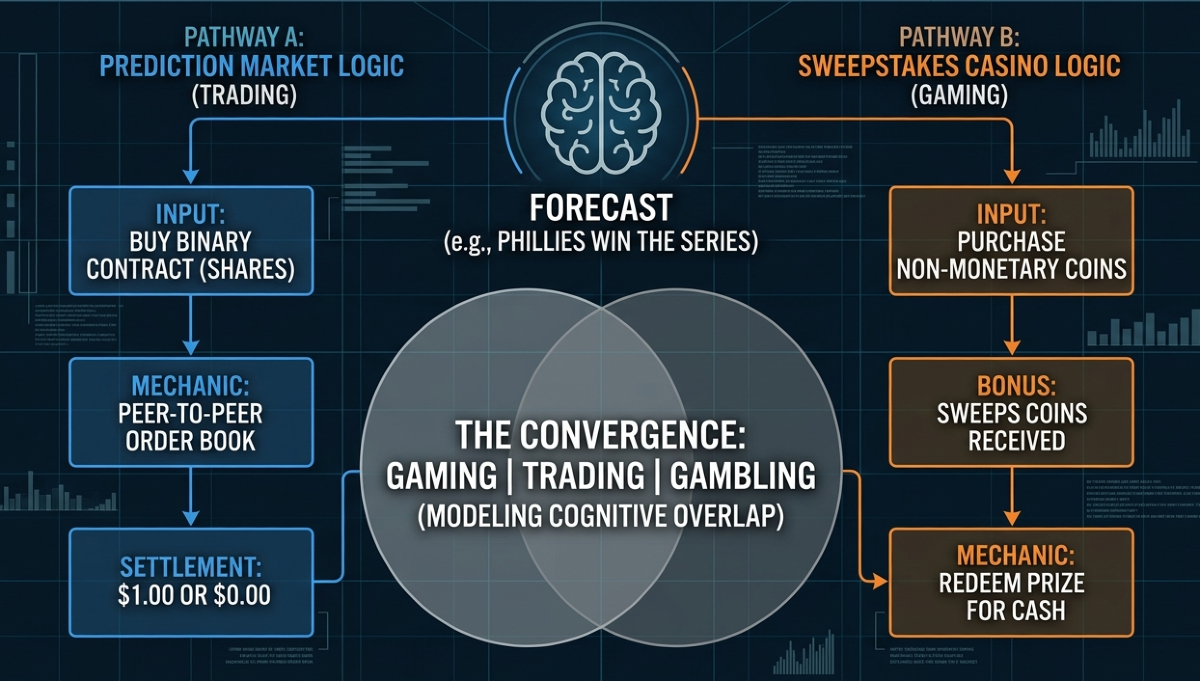
Prediction markets are not only concerned with sports results, but they have become an alternative to traditional sports betting that has more in common with trading platforms. The basic premise is that users can buy and sell contracts that relate to real-world outcomes, such as “Will Argentina win the 2026 World Cup?”
The system uses binary contracts, which means there is a Yes or No response. The contracts trade at between $0 and $1. The trading price represents the probability of an event occurring. So, if “Will Argentina win the 2026 World Cup?” trades at $0.64, it suggests the market believes there is approximately a 64% chance of Argentina winning. Buyers think the outcome is underpriced, and sellers think it is overpriced.
The main prediction market platforms include Kalshi and Polymarket. They promote their activity as financial trading, not gambling, and seek oversight through the Commodity Futures Trading Commission. This situation is subject to a series of federal lawsuits challenging the ability of prediction markets to operate outside gambling restrictions. Key concerns for critics include the potential for state tax avoidance, the circumvention of gaming licenses, potential abuse of insider information, and market manipulation.
However, prediction market provider Kalshi received a positive outcome at a New Jersey appeal court in April when the court ruled that gaming regulators in New Jersey could not prevent the operator from offering residents of the state the opportunity to trade contracts on the outcome of sports events.
This decision, and others that could follow, further promote the growth of prediction markets. Other reasons for the industry boom include the integration of these markets into brokerage and fintech products, as well as their popularity with younger users who prefer the concept of trading to betting.
Sweepstakes casinos and the regulatory position
Sweepstakes casinos provide a similar gaming experience to traditional online casinos. However, they operate under a dual-currency system. Gold coins are used for free play and have no monetary value. Sweepstakes coins are usually acquired via bonuses, mail-in requests, or as a free add-on to paid-for gold coin bundles. They can be redeemed for cash or prizes.
Sweepstakes casino operators differentiate themselves from traditional online casino providers by claiming that users are participating in sweepstakes, not gambling, because there is no requirement to spend real money to play.
The boom in sweepstakes casinos is driven by regulatory differences between them and traditional casino sites. While these traditional sites are only currently legal in seven US states, 33 states permit the use of sweepstakes sites with no restrictions.
While sweepstakes casinos are not regulated in the same way as traditional online casinos, the most reputable sites operate in ways that protect their users. This includes providing safer gaming tools and enabling fast and secure redemptions. Despite this, some are concerned that these sites exploit legal technicalities and pose a danger to vulnerable users. These concerns led to the ban on all sweepstakes sites in California from January 2026.
It’s clear that both prediction markets and sweepstakes casinos provide an alternative to traditional gambling by testing the lines between trading, gaming, and gambling. They may operate very differently, but both markets are booming. However, they also both face potential regulatory challenges in the future.
For prediction markets, Supreme Court fights are likely. There could also be tighter access controls and event category restrictions, including sports. For sweepstakes sites, more state bans could happen, as could forced licensing transitions.
Right now, both prediction markets and sweepstakes casinos are thriving, but there is a conflict. Prediction market operators say they provide trading services, while sweepstake casino operators say they offer promotional sweepstakes. Regulators are increasingly taking the position that they both appear to provide users with the opportunity to gamble. The coming months will begin to reveal where this conflict takes both markets and their users.