
How to analyze the tactical style of play in order to make informed bets and use the 1xBet code
Football is characterized by duality: although something is happening in the stadium, the true reasons are not visible to the viewer. They are hidden behind tactical decisions, which may be noticeable in exceptional cases. Predicting results is in the same segment. You can see which team is stronger, but the real work of the players eludes you. Conducting analysis and using the 1xBet code for profitable bets is actually more difficult than it seems.

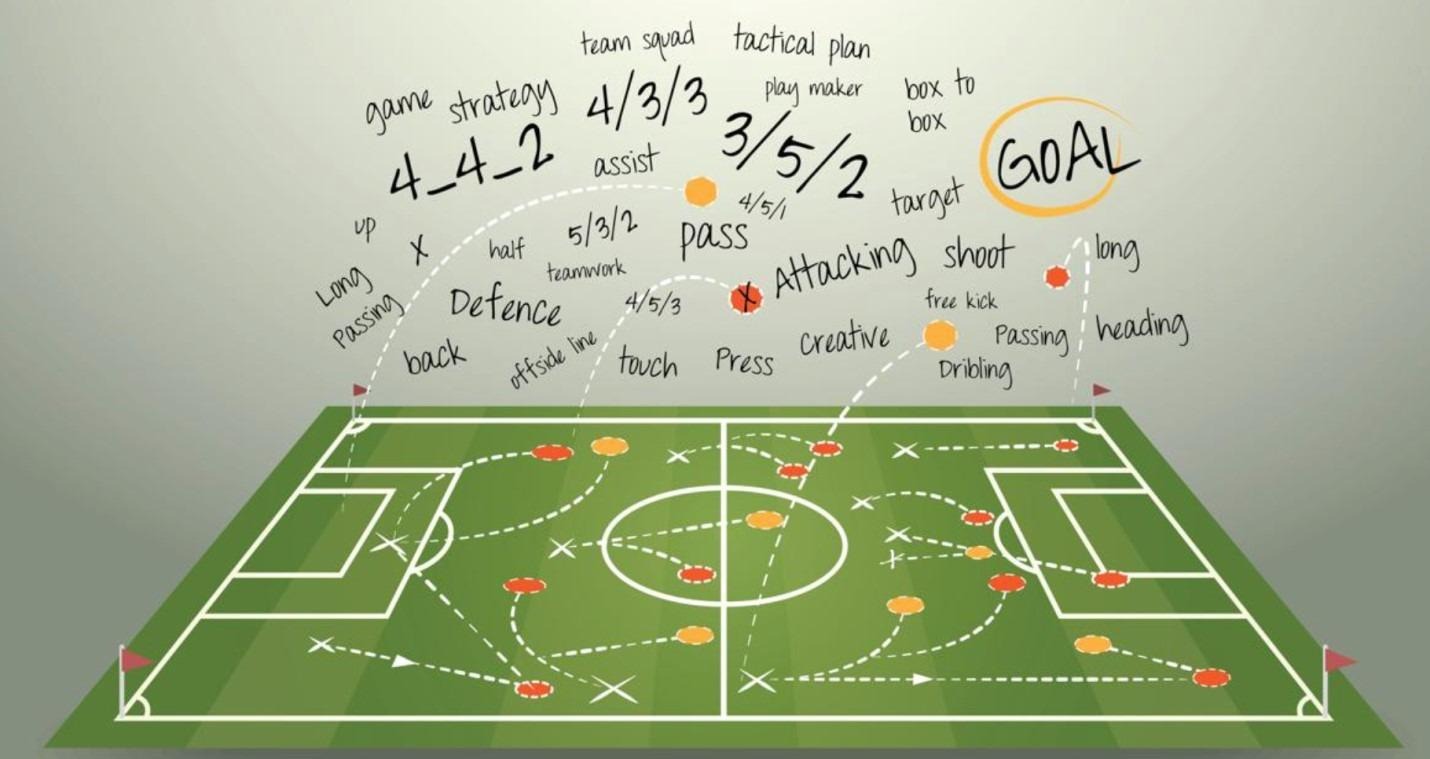
Tactical style of play is not just about the number of attacks or positional matches. It is a whole system of habits and restrictions. You can make informed choices using tactics as a foundation. First, you need to understand the logic of soccer, then assess the probabilities, and only then place a bet.
Analyzing the tactics used reveals the secrets of success and opportunities for earning money. The coach's chosen strategy determines:
-
the number of chances;
-
the frequency of losses;
-
the pace of the game;
-
approaches to the penalty line.
In addition, knowing the basic decisions, you can predict totals and handicaps, the number of corners, and sometimes live dynamics. By studying the strategy, it becomes clear why bookmakers set certain odds. The decisions are not random. They are the result of training specific habits.
The main components of the strategy: what to pay attention to
Space management on the field
This is a key element of tactics in any team game. The team's task is to create and control space to gain certain advantages. In addition, players limit their opponents' capabilities. The effectiveness of the strategy depends on the results of management. For example, the team manages to create such a balance of forces that increases the effectiveness of attacks and reduces risks.

Interaction between players is the next condition. Mutual understanding between participants is necessary for competent distribution of space on the field. This makes it possible to:
-
coordinate movements to create free zones;
-
block opponents' actions aimed at attacking;
-
prepare for possible attacks by the opponent.
In addition, space management is closely linked to the psychological aspect. It is important for players to be aware of their influence on the field and to have opportunities to use free zones. This allows them to act with more confidence and make decisions faster.
Analysis of behavior on the field is based on video, heat maps, and movement statistics. This helps to identify weak areas, predict opponents' actions, and improve game plans.
Thus, space management on the field is a complex task. It combines tactical discipline, player interaction, understanding of the game, and psychological stability. A team that can competently control space gains a strategic advantage, increases the effectiveness of attacks, and reduces defensive risks. The effectiveness of space management often determines the outcome.
Attacking space
As the name suggests, players use the space on the field to perform any type of attack – passing, movement, or shooting. In addition, the team tries to reduce the quality of goal defense. To do this, it tries to “stretch” the opponent's players and occupy key positions.
Thanks to the latter, it is possible to make effective goal passes without encountering any response. This opens up new lines and heats up the atmosphere. The attacker can move to the central zone and open up space between the defenders.
Defensive control
Defensive control of space involves organizing the team in such a way as to minimize free zones for the opponent's attacks. Players group together in key areas of the field, closing passing lanes and reducing the opponent's ability to get into advantageous positions.
It is important to maintain a compact defensive line so that the opponent cannot use the space between players to advance towards the goal. The movement of players on the field is also very important. They must be ready to quickly cover open spaces, maintain pressure, and adjust their positions depending on the opponent's actions.
Pressing
High pressing has become one of the key tactical revolutions in recent years. A team that actively presses its opponent near their goal forces them to make mistakes faster than they would like. This style has several advantages:
-
it increases the number of dangerous situations;
-
it creates chances from aerial balls;
-
saves time on long attacks.
For football betting, this means that matches involving such teams are usually played at high speed, which increases the likelihood of scoring opportunities. Totals in such matches are often closer to the upper values, and the games themselves are more unpredictable. Mistakes happen literally out of nowhere.
But high pressing cannot be equated with chaos. Each team has its own triggers. For example, a defender receives the ball with his back turned, a midfielder receives a pass to his weaker foot, or a goalkeeper delays the ball for a split second. A trigger is a signal to the entire group of players that it is time to rush into attack on the opponent's position.

If the coach has organized the system well, pressing looks like a coordinated burst of energy. If not, the team falls apart and misses counterattacks. For betting, it is important to understand not only that the team is pressing, but also how well it can return to its structure after a failure.
Opponents of such teams often play with long passes. This creates matches with a lot of ball interceptions, one-on-one battles, and quick transitions. For example, Liverpool's games in recent seasons under Jürgen Klopp are a great demonstration of pressing. However, they show that weak teams can suffer from quick counterattacks. Here, it is better to focus on specific stylistic connections than on the usual indicators of strength.
Ball possession
Possession is the other extreme. Teams that build their game around ball control try to eliminate chaos and turn the match into their own rhythm. They stretch their opponents. This allows them to wait for convenient moments. In addition, such teams carefully position their defense to prevent quick counterattacks.
And although such matches do not always end in a goal fest, they often feature many approaches to the penalty area and crosses. This affects corner football betting strategies, shots on target, and sometimes handicaps, if the team manages to overwhelm their opponents with positional pressure.
High odds on a large total help highlight such tactics. The fact is that they prefer to carefully break down the defense. But if the opponent is unable to defend with a low block, the match can unexpectedly open up. It is important for a bettor to not only know that a team likes to possess the ball. You need to understand how it uses possession: to control time or for constant waves of attack.
When analyzing, look at the percentage of successful passes, the number of threats from the final third, the pace of the game, and the movement patterns of players without the ball. For example, Barcelona during the Pep Guardiola era demonstrated possession as a weapon. Thanks to this, they not only kept the ball, but also created space for the attackers.
Counterattacks
Counterattacks are somewhere between control and pressing. The team often looks calm and even passive, but this is just a mask. Their real weapon is speed. They don't need the ball most of the time. Two or three mistakes by their opponents per match are enough for them. Sometimes these mistakes lead to two goals in a row, sometimes to zero if the opponent doesn't give anything away. This style creates the biggest gap between the feeling of control and the real threats.

For betting, this is one of the most dangerous areas. Matches with counterattacking teams often look logical until they suddenly turn into chaos. Therefore, it is important for bettors to look not only at football betting tips, but also at the structure of the field. If a counterattacking team finds space between the lines, it almost always leads to scoring opportunities. Conversely, if the opponent is able to cover the flanks, counterattacks simply do not happen. In such conditions, the under becomes more likely, despite the feeling that one team is “pressing.”
Low block
The low block is a defensive philosophy of patience. The team sits deep, closes down the penalty area, and creates a puzzle for the opponent. They have no choice but to look for the right solution or suffer. Betting on such matches often deceives beginners. It seems that the favorite simply has to score, but a low block can absorb all the momentum and deprive the favorite of freedom. For competitive football, this means that it is better to focus on the ability to break down the defense than on their strength on paper.
The peculiarity of a low block is that it rarely produces many corners or quick attacks. It often turns the game into a sticky battle for space in the penalty area. For some tournaments, this becomes especially important because low blocks are more common.
Team analysis in practice
Match analysis begins with studying the basic formation. Bettors need to understand the position of the players before the start of active play. The distribution pattern in attack and defense will allow you to move on to further evaluation. For example, you will see who is standing on the flanks.
In addition, consider how the team creates opportunities for attacks. Players who are not currently in possession of the ball are also important. You will notice who is open for a pass or supporting their teammates.
When observing, it is important to evaluate:
-
in space management: how effectively the team uses free zones;
-
in attack: where passing lanes open up and space for shots is created;
-
in defense: analyze the compactness of the lines, the blocking of key areas, and the ways of cutting off passing lanes.
Try to see how the team adapts when the ball changes position and how it reacts to the opponent's actions.
Draw conclusions only after watching the match. Try to identify the team's strengths and weaknesses, areas that need improvement, and ways to control key spaces. Visualizing patterns and taking notes will help you turn your observations into specific recommendations for training or strategic planning.
Why it matters
Understanding a team's tactical style is the foundation for informed betting. Pressing, ball possession, counterattacks, and low blocks are real tools for analysis. They help you determine where goals are likely to be scored, which betting lines are more stable, and which moments of the game will be most beneficial. The deeper your understanding of tactics, the less you depend on chance, and the more accurate your predictions become.
Tactics are the language the team speaks. A smart bet is based on understanding this. The more familiar a bettor is with the principles, the less risk there is of making a mistake when choosing bets. Use this advantage to increase the chance that betting on football matches is a logical step, not a coincidence.